Booking advice
How to Ensure a Great Comedy Event: Stage, Sound, Lighting and Room Setup
The room makes the show. A practical checklist for planners on staging, seating, microphones, lighting, food service and timing, so your comedy event gets the biggest laughs.
By Mike James · · 4 min read
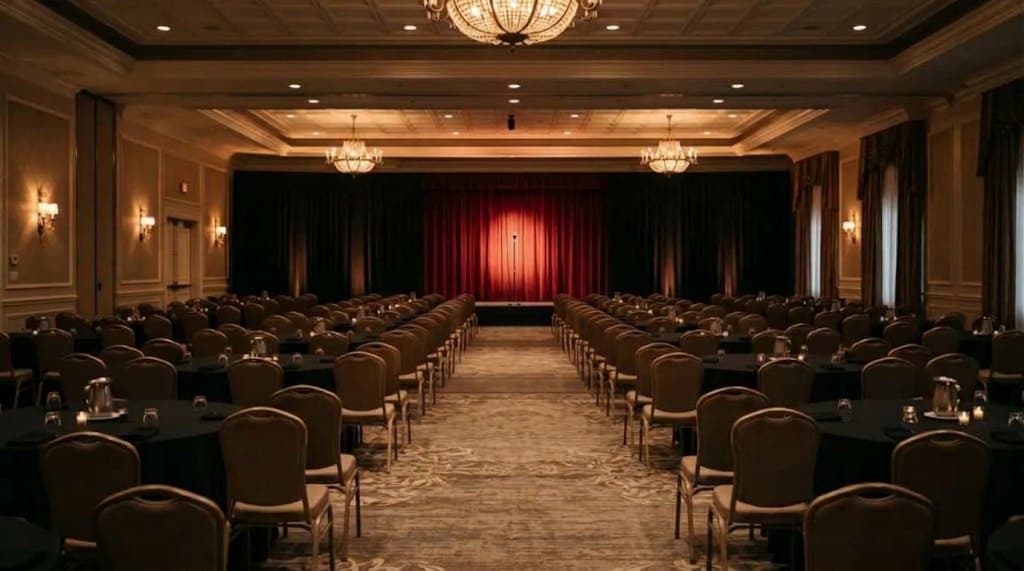
A well-run comedy performance can be the most memorable part of an event. Laughter builds connection, energy and goodwill. And the difference between a good show and a great one often comes down to a handful of practical details in the room, most of which cost nothing.
These recommendations come from hundreds of events in corporate settings, churches, community centers, restaurants, ballrooms and theaters. Use them as a checklist when you plan.
The essentials
If you only do six things, do these:
- A stage or elevated performance area
- Clear sightlines so every guest can see the performer
- A handheld microphone (preferred) or a quality lapel microphone
- Lighting that clearly lights the performer's face
- No food or beverage service during the performance
- No competing distractions: background music, video, slideshows or announcements
The rest of this guide explains why each one matters and how to get it right.
Stage and seating
Stand-up works best when the audience can see the performer clearly and feels a sense of shared attention.
Use a stage or riser. A raised platform makes a big difference, especially in rooms with more than 50 to 75 people or with round tables. Even a modest riser of 6 to 12 inches helps the back rows see. In larger ballrooms and banquet rooms, a stage is strongly preferred.
Check the sightlines. Columns, pillars, tall centerpieces and badly placed screens block faces and drain energy. When the room is being set, sit in a back seat and a side seat and look at the stage.
Turn the seats toward the stage. Theater-style rows produce the strongest connection and the biggest laughs. If dinner means round tables, place as many seats as possible facing the stage so nobody has their back to the performer. And keep the front tables or rows close. The tighter the room, the better the show feels.
Sound
Comedy depends on the audience hearing every word. Timing and punchlines lose their impact if people are straining to hear.
Microphone. A handheld microphone is preferred. It allows natural movement and reliable volume. A good lapel or lavalier mic works in most rooms, and a wired handheld on a stand is fine too. Whatever you use, test it before guests arrive.
Sound system and sound check. The PA needs to deliver clear spoken-word volume to the whole room, not just background-music levels. A short sound check before the doors open sets levels properly and heads off most technical surprises. Fresh batteries in wireless systems, plus a backup mic or batteries if you have them, add peace of mind.
Lighting
Facial expressions are a huge part of stand-up, so the audience needs to see the performer's face.
- Light the performance area from the front with a spotlight or bright stage wash.
- Make house lights dimmable, so attention settles on the stage during the set.
- Avoid strong backlighting from windows, bright screens or lights behind the performer. It turns the comedian into a silhouette.
Minimizing distractions
Once the show starts, the room's focus should be on the stage. Even well-meant activity pulls attention away.
Finish food and beverage service first. Plate clearing, drink refills and bar traffic during the set create noise and movement that compete with the show. Most events schedule comedy after dinner or during a dedicated entertainment portion of the program.
Turn everything else off. Background music, TVs, slideshows, videos and moving graphics should be off during the performance. Hold announcements until the set is over, and close exterior doors to keep outside noise out. These small steps let the audience settle in and the rhythm of the show build.
Timing and logistics
A few details help the performance start smoothly and run without interruption:
- Confirm the start time and set length in advance.
- Name an on-site contact who can answer questions or make quick adjustments.
- Allow arrival and sound-check time before guests are seated, typically 45 to 60 minutes.
- Offer a quiet space for pre-show preparation if one is available.
- Plan a brief, warm introduction. It sets a positive tone. Your comedian can provide a short bio.
The bottom line
The best comedy events share a few traits: a clear stage area, reliable sound, good lighting, and a room free of competing activity during the performance. When those are in place, audiences respond more fully and the whole event feels polished.
Most of these steps are easy and make a noticeable difference. If you have questions about your venue or setup, just ask. Mike is happy to help make sure your event is a success.