Team building
Game Show Team Building: Why It Works (and How to Run One Right)
A hosted game show can turn an ordinary company event into the part everyone talks about. Here's why it works, what makes one great, and how to plan it.
By Mike James · · 3 min read
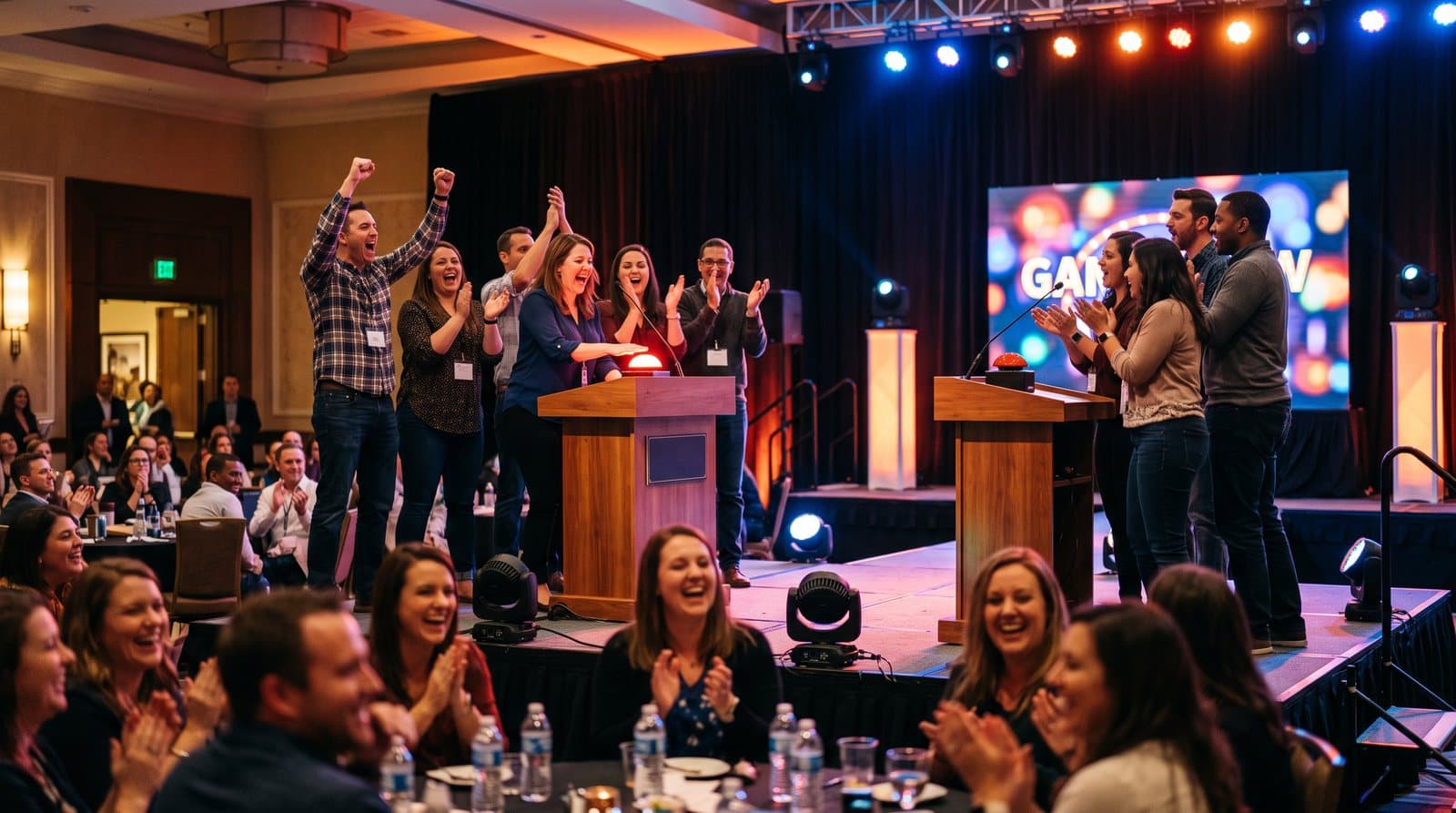
Some team-building activities need a sales pitch. A game show doesn't. Put two teams at podiums, give them a buzzer and a host, and even the most reserved department turns competitive in about ninety seconds.
Why game shows work for teams
- Everyone already knows the format. Nobody needs a long explanation. People have watched game shows their whole lives.
- Teams form instantly. A shared goal and a friendly rival is the fastest bonding there is.
- The audience plays too. Coworkers in the seats shout answers, groan at wrong guesses and cheer their department. Nobody is left out.
- It creates stories. The guess that made the room explode, the comeback in the final round. Those become inside jokes that last for months.
- It fits almost anywhere. A conference general session, a holiday party, an offsite afternoon, an all-hands that needs a lift.
The host makes or breaks it
A game show is only as good as the person running it. A great host keeps the pace quick, makes every contestant look good, reads the room, and knows when to let a funny moment breathe and when to move on. A comedian with improv training is built for exactly this: the best moments in a game show are never scripted.
What to look for:
- Experience with live, unpredictable crowds. Contestants will say things nobody expected. That's the fun part, if the host can run with it.
- Clean, kind humor. Teasing should land on the situation, never on a person.
- Control of the clock. Your agenda has a hard stop. A professional ends on time and on a high.
Friendly Feud: a survey game built on your own people
Mike James hosts Friendly Feud, his game show based on the classic TV show Family Feud. Teams face off to guess the most popular answers to survey questions.
The twist that makes it great for team building: the surveys can come from your own staff. A few weeks before the event, your team answers a short, clean survey ("Name something people always do in a meeting," "Name the most popular snack in the break room"). On game day, the answers on the board are what their coworkers actually said, and that's funnier than anything on TV.
Other game show formats
- Company trivia about your history, products and industry
- "How well do you know your team?" quizzes built from fun facts your staff share in advance
- Quick-fire rounds that mix trivia, guessing games and audience participation
Planning checklist
- Length: 45 to 60 minutes covers several rounds and a final.
- Teams: Five or six players per team on stage works well, with the rest of the room playing along.
- Setup: A stage or open front area, a microphone, and a screen or projector for the scoreboard.
- Prizes: Optional, but even small prizes (bragging rights included) raise the energy.
- Timing: Game shows shine after dinner or as the closer of a long day.
Friendly Feud is an independent show by Mike James Comedy and isn't affiliated with or endorsed by Family Feud or its producers.
See all the formats on the comedy team building page.