55+ communities
Booking a Comedian for a 55+ Community: An Activity Director's Guide
How to choose, schedule and set up a comedy show that residents love, with notes on sound, pacing, timing around meals, and what to ask the performer.
By Mike James · · 3 min read
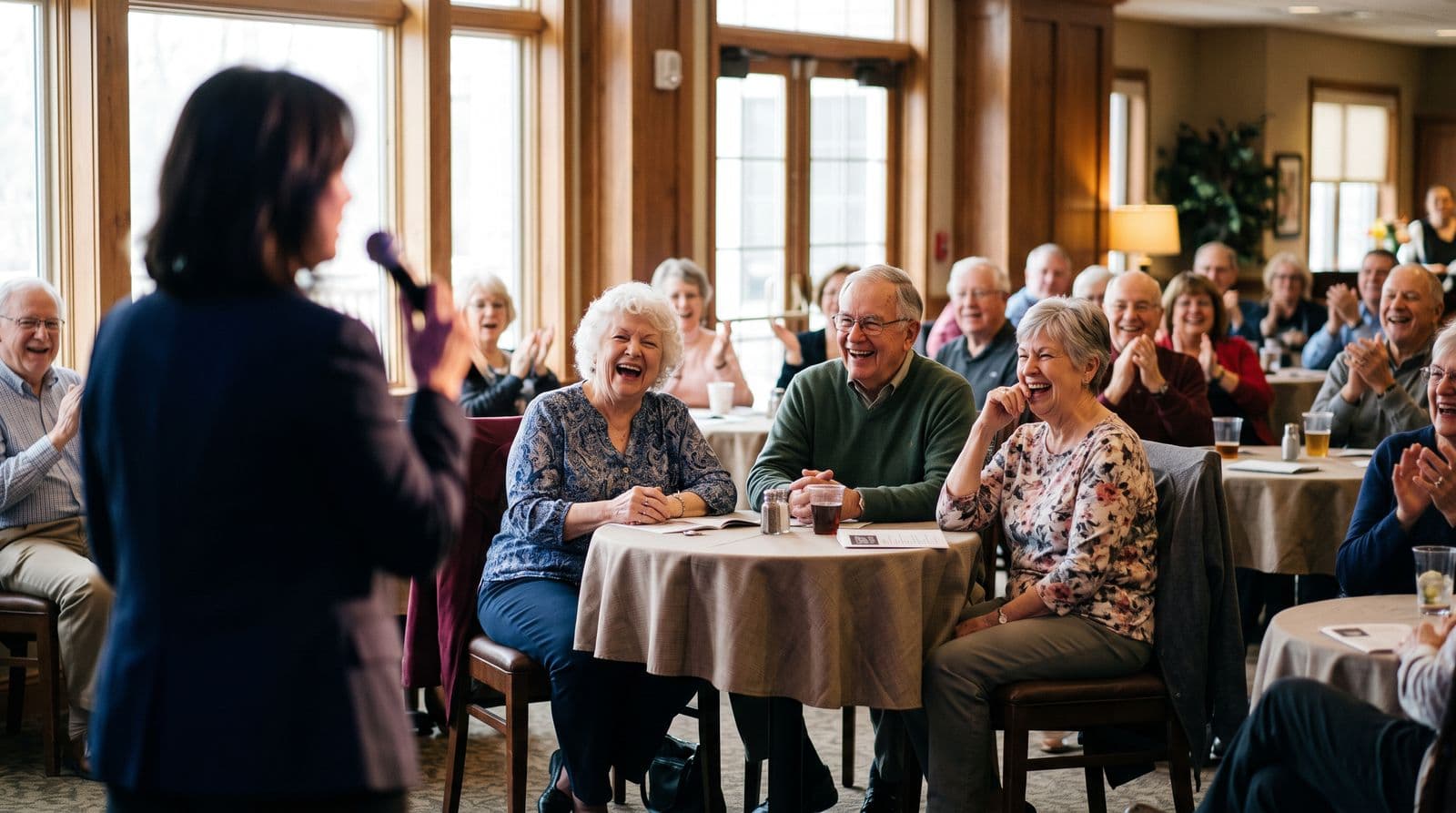
Live comedy is one of the highest-return events on a community calendar. It needs no equipment beyond a microphone, it fits in a clubhouse or a dining room, and when it works, residents talk about it for weeks. Here's how to make it work.
What residents actually want
Not jokes about being older. Jokes from someone who gets it. The comedians who do best in 55+ rooms are performing material about long marriages, grandkids, doctor visits and retirement from the inside, not doing an impression of it. A comic in his thirties riffing on hearing aids will get polite laughter. A grandfather of seven telling the truth about a 35-year marriage gets the room.
Ask every candidate: how old are you, and how much of your act is about your own life? You're not being rude; you're checking fit.
Clean means clean
Residents are adults and most of them have heard everything. That's not the point. The point is the room: residents, their adult children, staff, and the grandchildren who came for the visit. One crude line changes who shows up next time. Book a comedian who is fully clean and you never have to think about it again.
Timing and length
- Length: 45 minutes is the sweet spot for a stand-alone show. 30 minutes works well after a meal or inside a longer program.
- Time of day: Early afternoon and right after dinner both work. Avoid the hour before a meal (people leave early) and late evenings.
- Day of week: Weekday afternoons are often the best-attended and the least expensive dates to book.
Setting up the room
Sound is everything. A clear microphone and speakers at the front, tested with the comedian before residents arrive. If some residents use hearing assistance, ask whether your system can feed it.
Sightlines. Seat people close together and toward the front. Leave aisle space and room for walkers and chairs. Laughter spreads through a tight room and dies in a scattered one.
Light. Make sure the comedian is well lit. Many residents read faces as much as they hear words.
Pacing. Tell the comedian about any accessibility considerations in advance. Good performers slow down, repeat setups, and keep material visual and story-driven rather than relying on fast wordplay.
Questions worth asking the comedian
- How many 55+ communities have you performed for in the last year?
- Can you send a full-length video, not just clips?
- What do you need technically? (The answer should be short.)
- Will you stay for a few minutes afterward? Residents love to say hello.
- What's the fee, and does it include travel?
Budgeting
Professional 55+ shows are typically priced below corporate rates for the same performer, and weekday dates are lower still. Many communities fund them from the activities budget alone; others co-host with a neighboring community or a sponsor (a local home-health agency, a bank branch) to split the cost and the audience.
The day-of checklist
- Mic and speakers tested 60 minutes before
- Chairs set close, front rows filled first
- Water on stage, a stool available
- A short, warm introduction ready (two sentences is plenty)
- Someone assigned to take photos for the newsletter
Do those five things and the comedian will do the rest.